Psoriasis Is More Than Just Dry Skin: Here's Why
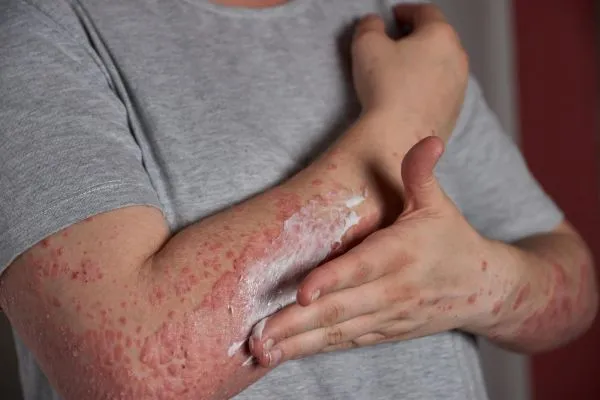
Psoriasis can look like dry, flaky skin, but it is much more than simple dryness. It is a chronic inflammatory skin condition that can cause thickened, scaly patches, itching, redness, and recurring flare-ups.
Understanding the difference between psoriasis and ordinary dry skin is important because the two conditions require very different approaches to management.
Common Signs
- Thick, scaly patches
- Red or inflamed skin
- Persistent itching
- Silvery-white scales
- Recurring flare-ups
- Dry or cracked skin
What Is Psoriasis?
Psoriasis is a chronic inflammatory skin disease in which the immune system plays an important role. It causes skin cells to develop and accumulate much faster than normal, resulting in characteristic thickened and scaly patches.
The condition can affect different parts of the body, including the elbows, knees, scalp, lower back, hands, feet, and nails. Some people may also develop inflammation in the joints, known as psoriatic arthritis.
Unlike ordinary dry skin, psoriasis is not simply caused by a lack of moisture.
Psoriasis vs Dry Skin: What's the Difference?
Dry skin usually develops when the skin loses moisture. Psoriasis involves inflammation and abnormal immune activity, which causes a different pattern of symptoms.
| Feature | Dry Skin | Psoriasis |
|---|---|---|
| Cause | Often related to moisture loss and environmental factors | Chronic inflammatory and immune-mediated condition |
| Appearance | Dry, rough or flaky | Well-defined red or inflamed plaques with scaling |
| Scales | Usually fine flakes | May be thicker and silvery-white |
| Course | Often improves with moisturisation | Can recur with periods of flare-ups and remission |
Signs That It May Be Psoriasis
Thick Scaly Patches
Psoriasis can create raised patches covered by characteristic scales.
Redness & Inflammation
Inflamed areas may appear red or darker depending on your natural skin tone.
Persistent Itching
Itching can range from mild to severe and may interfere with daily activities.
Recurring Flare-Ups
Symptoms may improve and then return when triggered by various factors.
What Can Trigger a Psoriasis Flare-Up?
Psoriasis does not have one single trigger. Different people may notice different factors that cause or worsen their symptoms.
Emotional or physical stress may contribute to flare-ups in some people.
Certain infections can trigger psoriasis in susceptible individuals.
Psoriasis can sometimes develop at sites of skin trauma, a phenomenon known as the Koebner phenomenon.
Some medications can worsen psoriasis in susceptible people.
Where Can Psoriasis Appear?
Scalp
Can cause scaling, itching, and plaques around the scalp.
Elbows & Knees
Classic locations for plaque psoriasis.
Hands & Feet
Psoriasis can affect the palms and soles and may cause painful cracking.
Nails
Nail changes such as pitting, thickening, or separation can occur.
Psoriasis Can Affect More Than Your Skin
One reason psoriasis should not be dismissed as simple dry skin is that the condition can involve more than the skin.
Some people with psoriasis develop nail changes, and some develop psoriatic arthritis, which can cause joint pain, stiffness, and swelling.
If you have psoriasis and develop persistent joint symptoms, discuss them with a healthcare professional rather than assuming they are unrelated.
How Is Psoriasis Treated?
There is currently no single treatment that permanently cures psoriasis for everyone. However, modern treatments can control inflammation, reduce symptoms, improve skin appearance, and help prevent flare-ups.
Moisturisers
Regular moisturisation can help reduce dryness and support the skin barrier.
Topical Medicines
Depending on the severity and location, dermatologists may prescribe topical medicines to reduce inflammation and scaling.
Phototherapy
Controlled ultraviolet light may be recommended for selected patients.
Advanced Treatments
Moderate to severe psoriasis may require systemic or biologic treatments under specialist supervision.
Everyday Tips for Managing Psoriasis
Moisturise Regularly
Apply a suitable moisturiser regularly, particularly after bathing.
Avoid Very Hot Baths
Hot water can worsen dryness and irritation for some people.
Don't Scratch
Scratching can worsen irritation and may contribute to new lesions developing at sites of injury.
Follow Your Treatment Plan
Consistent treatment and follow-up can help keep psoriasis under control.
Explore Psoriasis Treatment
Psoriasis Treatment
If persistent scaling, redness, itching, or recurring skin patches are affecting your daily life, professional assessment can help identify whether psoriasis is the cause and guide appropriate treatment.
Explore Psoriasis TreatmentPsoriasis: Myth vs Fact
Myth
Psoriasis is simply dry skin and can be fixed by applying more moisturiser.
Fact
Moisturising can help relieve dryness, but psoriasis involves inflammation and immune-system activity and often requires targeted medical treatment.
Frequently Asked Questions
Is psoriasis just dry skin?
No. Dry skin is primarily related to moisture loss, whereas psoriasis is a chronic inflammatory skin condition involving the immune system.
How can I tell if I have psoriasis or dry skin?
Psoriasis often causes well-defined, thickened patches with scaling and may repeatedly flare. Persistent or unusual scaling should be assessed by a dermatologist rather than diagnosed based on appearance alone.
Is psoriasis contagious?
No. Psoriasis is not an infection and cannot be transmitted through touching, sharing objects, or close contact.
Can psoriasis affect the nails?
Yes. Psoriasis can cause nail pitting, thickening, discolouration, separation of the nail from the nail bed, and other changes.
Can psoriasis affect the joints?
Yes. Some people with psoriasis develop psoriatic arthritis. Persistent joint pain, swelling, or stiffness should be medically evaluated.
Can psoriasis be cured permanently?
There is currently no universal permanent cure, but psoriasis can often be managed effectively with appropriate treatment and long-term care.
When should I see a dermatologist?
Consider a dermatology consultation if you have persistent scaly patches, recurring redness, significant itching, unexplained nail changes, or symptoms that do not improve with ordinary moisturisers.
Don't Mistake Persistent Psoriasis for Simple Dry Skin
If dry, scaly, itchy, or inflamed patches keep returning despite regular moisturisation, it may be time for a professional skin assessment. Early diagnosis and appropriate treatment can help control psoriasis and reduce its impact on everyday life.
Book a Dermatology ConsultationFor enquiries you can get in touch with us at info@drkeerthanakalva.com