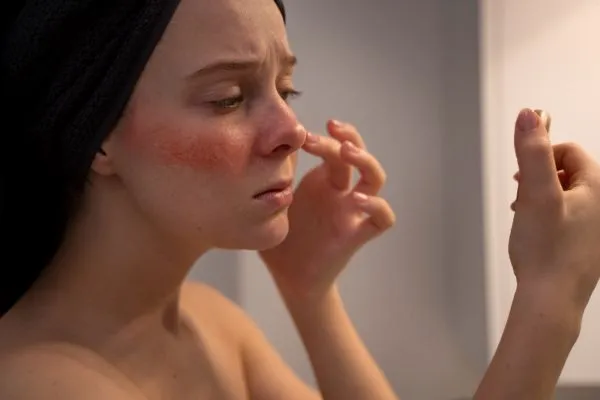
Understanding Rosacea: Why Your Face Stays Red
If your cheeks, nose, chin, or forehead often appear red—even without sun exposure or exercise—you may be dealing with rosacea. This common, long-term skin condition causes persistent facial redness and flare-ups that can affect both appearance and confidence.
Although rosacea cannot always be cured, early diagnosis and appropriate treatment can help reduce redness, control flare-ups, and improve overall skin comfort.
Common Symptoms
- Persistent facial redness
- Frequent flushing
- Visible blood vessels
- Acne-like bumps
- Burning or stinging sensation
- Sensitive skin
What Is Rosacea?
Rosacea is a chronic inflammatory skin condition that mainly affects the central part of the face. It commonly causes persistent redness, episodes of flushing, visible blood vessels, and in some cases, small red bumps that resemble acne.
Because rosacea symptoms often come and go, many people mistake it for sensitive skin, allergies, or adult acne. A proper dermatological evaluation is important for an accurate diagnosis and treatment plan.
Common Rosacea Triggers
Sun Exposure
Ultraviolet rays are among the most common triggers for flare-ups.
Hot Drinks
Tea, coffee, and other hot beverages may worsen redness in some people.
Spicy Foods
Certain foods may trigger facial flushing.
Stress
Emotional stress can contribute to rosacea flare-ups.
Rosacea vs Acne
| Feature | Rosacea | Acne |
|---|---|---|
| Persistent Redness | Very Common | Less Common |
| Blackheads | Usually absent | Common |
| Visible Blood Vessels | Frequently seen | Uncommon |
| Common Age | Adults | Teenagers & adults |
Managing Rosacea
Myth vs Fact
Myth
Rosacea is simply adult acne.
Fact
Although rosacea may resemble acne, it is a different chronic inflammatory skin condition that requires its own diagnosis and management approach.
Frequently Asked Questions
Can rosacea go away on its own?
Rosacea is generally a chronic condition, but symptoms can often be managed effectively with appropriate treatment and trigger avoidance.
Is rosacea contagious?
No. Rosacea cannot spread from one person to another.
Can makeup worsen rosacea?
Some cosmetic products may irritate sensitive skin. Choosing gentle, fragrance-free products is often recommended.
Does stress trigger rosacea?
Yes. Emotional stress is a common trigger for many individuals with rosacea.
Can sunlight make rosacea worse?
Yes. UV exposure is one of the most frequently reported rosacea triggers, making daily sun protection important.
When should I consult a dermatologist?
If facial redness persists, becomes more frequent, or is accompanied by bumps, burning, or visible blood vessels, it's advisable to seek a professional evaluation.
For enquiries you can get in touch with us at info@drkeerthanakalva.com